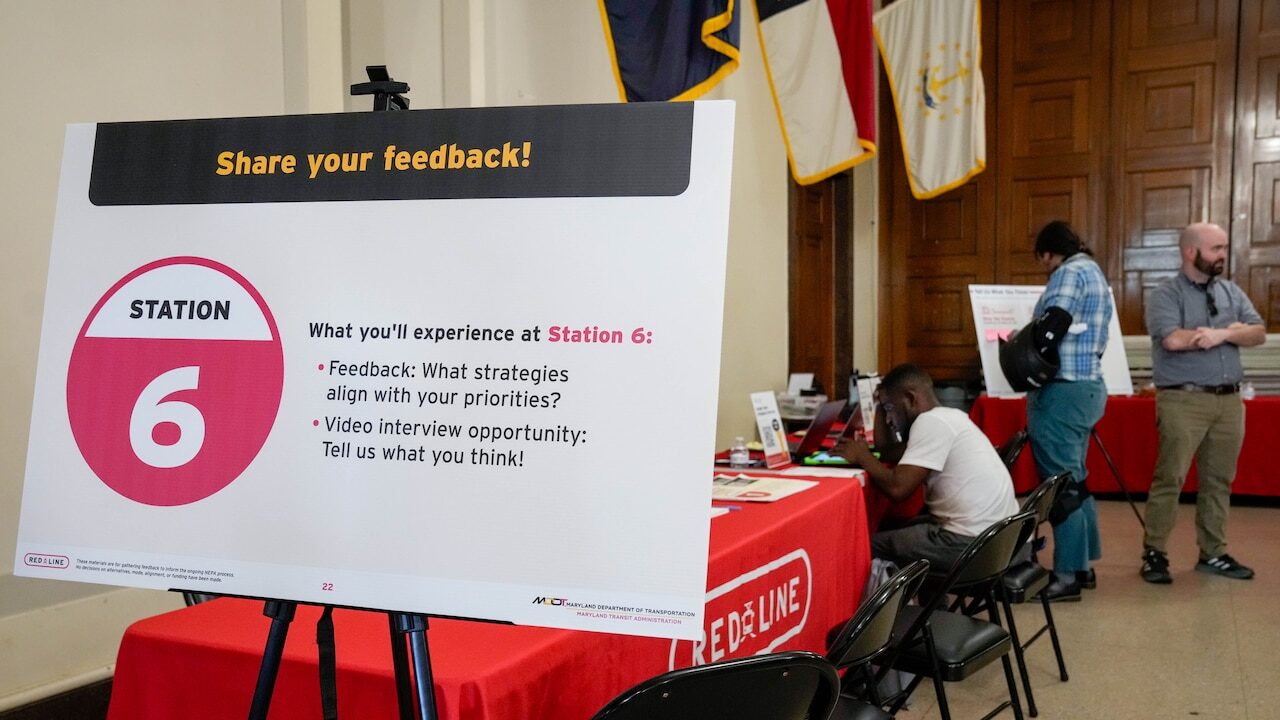
Baltimore resident Bryan Swann has long awaited the implementation of the Red Line, a proposed rail system that would connect West Baltimore with the eastern parts of the city. Swann, who was a student at Digital Harbor High School when the project was first proposed in 2013, recalls discussing its potential with friends, envisioning improved access to jobs and opportunities.
However, in 2015, then-Governor Larry Hogan halted the project, labeling it a "wasteful boondoggle" and returning nearly a billion dollars in federal funding. Nearly a decade later, Swann is still looking for a viable transit solution and is skeptical about the recently proposed Bus Rapid Transit (BRT) system.
“If we’re being realistic, what they’re offering with the bus alternative is better than the project just sitting there,” Swann noted during a recent open house event hosted by the Maryland Transit Administration (MTA).
The MTA's open houses aimed to inform the public about three potential options for the Red Line project, which would connect Woodlawn in Baltimore County to Johns Hopkins Bayview Medical Center in East Baltimore. The proposed options include a full Light Rail Transit (LRT) system, a phased light rail approach, and the BRT system.
The full LRT option is estimated to cost between $5 billion and $9 billion and could take up to 12 years to complete. In contrast, the phased light rail would start at around $2 billion, while the bus rapid transit system is projected to cost between $750 million and $1 billion. Attendees at the open house expressed a preference for the rail options, yet many expect the bus system to be the final outcome.
Anna Ellis, a volunteer with the Transform Maryland Transportation Coalition, voiced her concerns, stating, “We need a real transit system. We don’t have one now.” She feels that even the incremental rail option remains prohibitively expensive and worries that the decision may already be made in favor of the bus system.
Despite the concerns expressed by community members, MTA officials maintain that all options are still under consideration. Caitlin Tobin, the agency's Red Line senior project director, emphasized the importance of transparent dialogue during the sessions.
Many attendees echoed the sentiment that Baltimore deserves more than a subpar transit solution. Michael Scepaniak, president of the community advocacy group BaltPOP, appreciated the MTA's efforts to provide clarity on the project but expressed disappointment that the most effective option may not be feasible given the current budget constraints.
As Baltimore grapples with a projected $2.3 billion budget shortfall and the loss of federal jobs, the hope for a robust transit system remains a critical issue for residents who seek better access to opportunities and resources.
Reported by HarborBeat based on thebanner.com (source).
0 Comments
Log in to join the conversation.