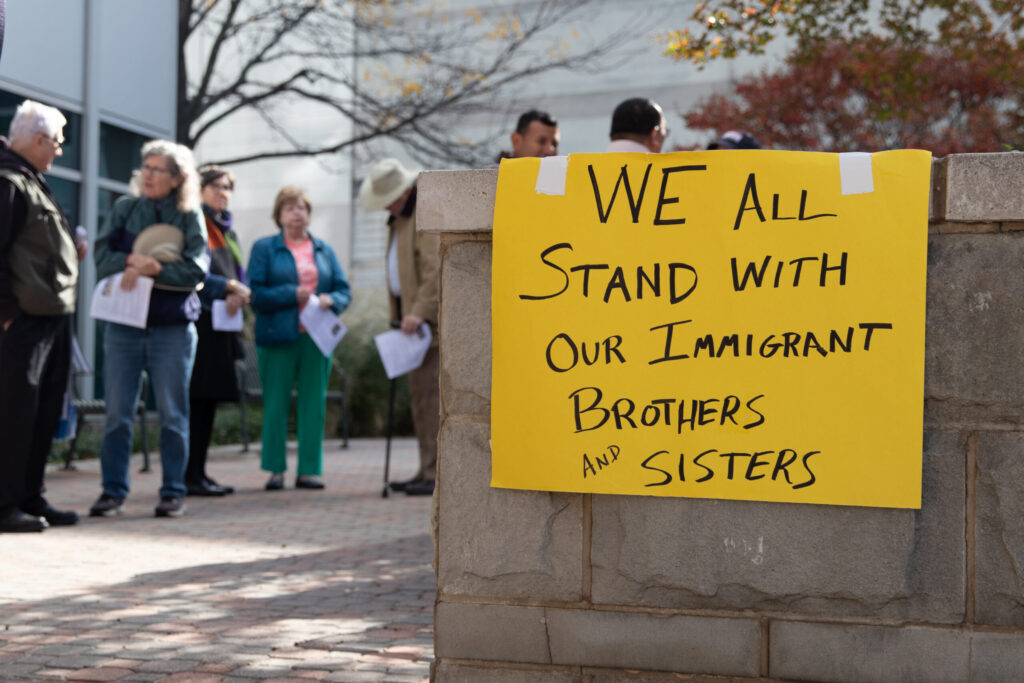
Recent legislation in Maryland has prohibited county and local law enforcement from entering into agreements with U.S. Immigration and Customs Enforcement (ICE), igniting a partisan divide among candidates ahead of the 2026 General Assembly elections.
The ban, which reflects the predominantly Democratic stance in the state, has garnered support from a significant majority of Democratic candidates. They argue that limiting police collaboration with ICE fosters trust within immigrant communities and encourages reporting of crimes without fear of deportation.
Delegate Teresa Woorman, a Democrat from Montgomery County, emphasized the personal significance of the ban, having grown up undocumented herself. She believes that the legislation is crucial for protecting families from the potential harms associated with ICE interventions.
In contrast, Republican candidates express concerns that the ban may jeopardize public safety by removing valuable federal resources from local law enforcement. Bobby “Al Jolson” Berger, a Republican candidate from Baltimore County, argued that local police should assist ICE agents when necessary, asserting that cooperation is essential for maintaining safety.
A survey conducted by the University of Maryland's Local News Network revealed that out of 235 candidates in competitive races, 141 responded, with a majority supporting the ban. The previous agreements, known as 287(g) deals, allowed local officers to collaborate with ICE, including the arrest and detention of individuals.
Democratic candidates like Adrian Muldrow, running in Baltimore’s District 41, expressed that fear of immigration enforcement could deter individuals from reporting crimes, thereby undermining public safety. They also highlighted the economic and community contributions of Maryland’s immigrant population, which comprises over 1 million residents and nearly 22% of the state's workforce.
On the Republican side, concerns about public safety were echoed by Delegate Robert Long, who argued that the ban hinders the ability of law enforcement to identify and apprehend criminals. Some Republican candidates acknowledged the need for trust-building within communities but maintained that cooperation with ICE should not be sacrificed.
As the debate continues, candidates on both sides of the aisle are preparing for a contentious election cycle, with immigration policy emerging as a key issue.
Reported by HarborBeat based on Maryland Matters (source).
0 Comments
Log in to join the conversation.