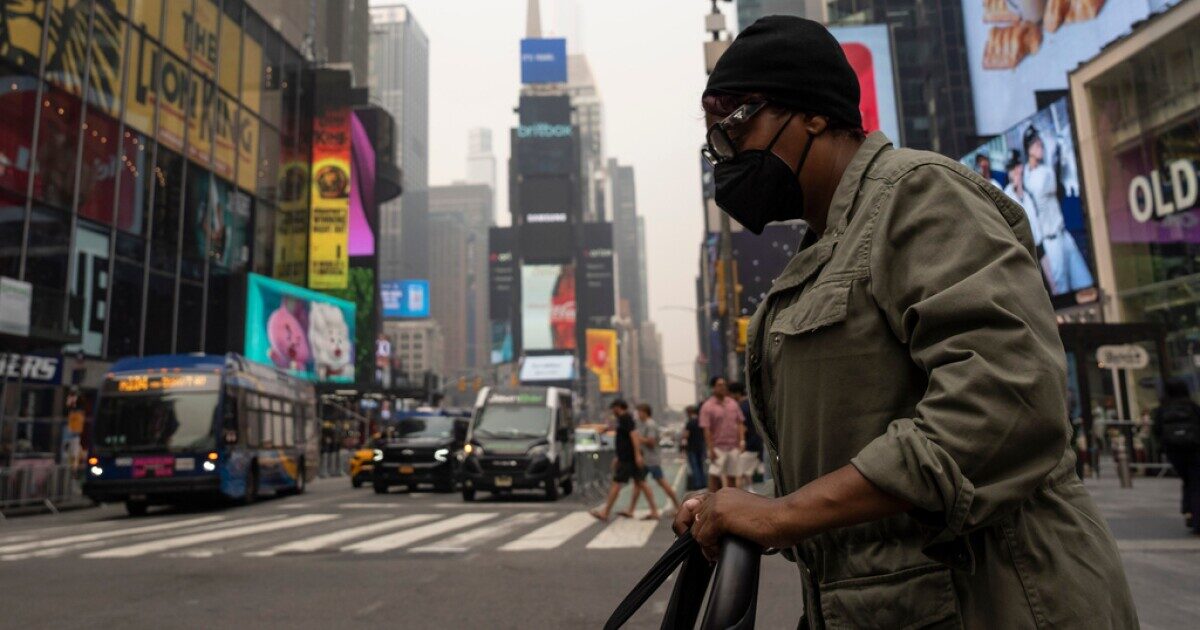
On Thursday, heavy wildfire smoke enveloped areas from the Great Lakes to the East Coast, prompting health warnings as visibility decreased and air quality deteriorated to unhealthy levels.
Officials in multiple cities advised residents to remain indoors or wear masks outdoors due to the hazardous air conditions. The smoke is primarily originating from wildfires in Canada, as well as from northern Minnesota. A persistent high-pressure system has trapped the smoke near the ground, resulting in dangerously poor air quality.
In cities like Detroit, visibility was reported to be as low as half a mile, with air quality among the worst globally. Meteorologist Steven Freitag noted the extreme conditions, stating, "It’s really pretty extreme levels."
Health experts warn that the microscopic particles in the smoke can penetrate deep into the lungs and bloodstream, leading to serious health issues such as respiratory and cardiovascular problems.
In Michigan and Minnesota, hazardous air quality alerts were issued, while the Chicago area experienced very unhealthy to hazardous conditions. Similar warnings extended to New York City, where officials opened cooling centers and distributed masks to residents as thick haze obscured the skyline.
New Yorkers were urged to limit outdoor activities, with city officials rescheduling events and moving activities indoors. Reports indicated that the smoke could persist, potentially returning as winds shift.
In Philadelphia, health officials recommended avoiding strenuous activities outdoors, emphasizing the importance of wearing N95 or KN95 masks.
Meanwhile, in Minnesota, forest rangers continued to search for individuals who may have been in remote areas impacted by the wildfires, which have led to the closure of the Boundary Waters region.
As conditions remain unpredictable, meteorologists caution that the smoky air may linger for an extended period until the wildfires are fully contained, possibly lasting until snowfall.
Reported by HarborBeat based on WMAR-2 News (source).
0 Comments
Log in to join the conversation.