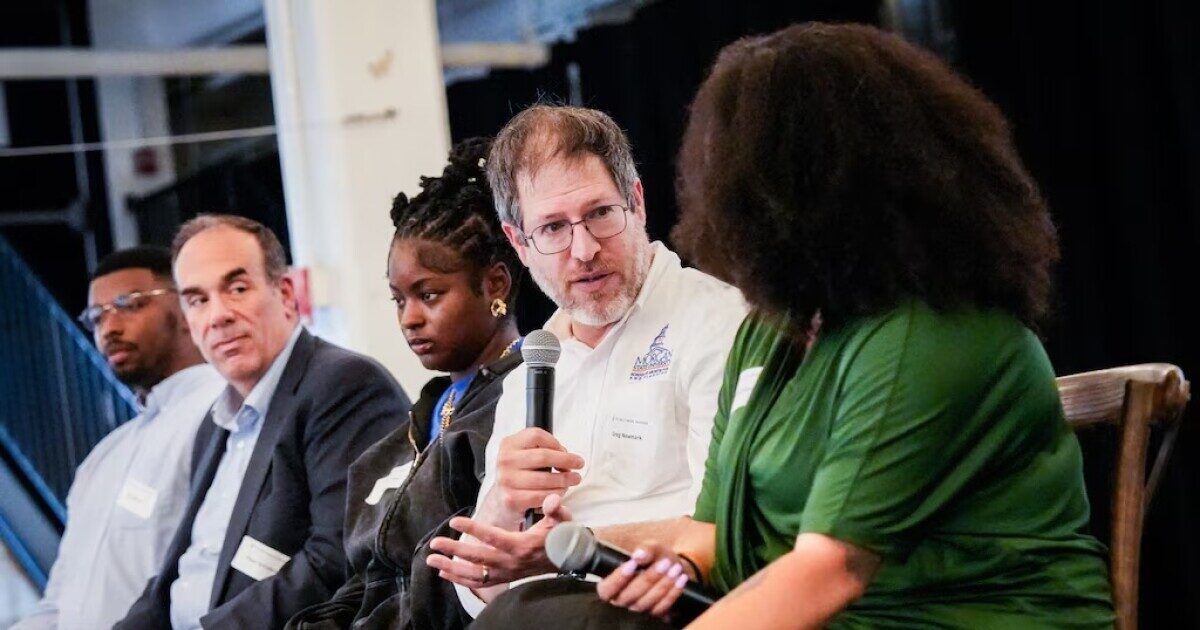
Transportation and education specialists in Baltimore are advocating for a more data-driven approach to tackle the city's student transit challenges. They argue that understanding student needs and allocating appropriate funding are essential steps toward improvement.
This discussion took place during a town hall event on Monday night at R. House, which saw over 100 attendees, including students and community members. The event was organized by The Baltimore Banner following a detailed investigation released in February.
The investigation revealed that approximately 25,000 students rely on public buses, yet one in four of these buses arrives late or fails to show up entirely in the mornings. This unreliability has been linked to decreased attendance and lower grades in first-period classes.
During the panel, experts proposed various solutions, but representatives from the Maryland Transit Administration (MTA) and the Baltimore City school system did not participate. Roger Schulman, who heads the Fund for Educational Excellence, emphasized the necessity of collecting student data, which the MTA currently does not do.
“Hearing from the people who use your service is incredibly valuable,” Schulman stated, noting that students' needs are often overlooked in route planning.
According to a 2021 report by the nonprofit, students account for about 18% of MTA ridership, with older students frequently needing to transfer buses due to school choice policies. Urban planning professor Greg Newmark pointed out that the school system does not financially contribute to the MTA for transporting these students, creating an “unfunded burden” on the transit agency.
Newmark also highlighted infrastructure issues such as malfunctioning traffic lights and poor street design that contribute to bus delays. “Improving street efficiency could significantly enhance bus service,” he noted.
Students shared their experiences with the transit system. Brooke Bourne, a senior at Western High School, described the difficulties of transferring between buses, which can take up to an hour, leading to missed connections and longer walks to school.
Rowan Shober-Levine, a junior at the Baltimore School for the Arts with a disability, voiced concerns about accessibility, stating that the distance from the bus stop to school can be challenging.
Ashley Esposito, a member of the Baltimore City school board, mentioned ongoing discussions about prioritizing transportation solutions, particularly for vulnerable populations such as students with disabilities and those experiencing homelessness. She emphasized the importance of understanding the diverse needs of students as they address these transportation issues.
Reported by HarborBeat based on WYPR (source).
0 Comments
Log in to join the conversation.