BALTIMORE — Baltimore City Public Schools, backed by a substantial budget of $1.7 billion, is grappling with a troubling trend in student performance, particularly in mathematics. A recent investigation has revealed that many high schools within the district are seeing alarmingly low math test scores.
In a concerning statistic, 13 high schools reported that no students achieved proficiency in math on the state assessments conducted last spring. Additionally, nearly 75% of students at these schools fell into the lowest category of performance, indicating a significant gap in educational outcomes.
Even among the top-performing high schools in the district, the results are disheartening. Of the 809 students who took the state math test at these institutions, only 11% scored proficient. This persistent issue has prompted questions about who will take responsibility for addressing the educational shortcomings.
Attempts to engage with school leaders for clarity on improvement strategies have been met with resistance. Recently, when Project Baltimore sought answers from the school system, their cameras were blocked from recording during a public school board meeting, and officials declined to comment.
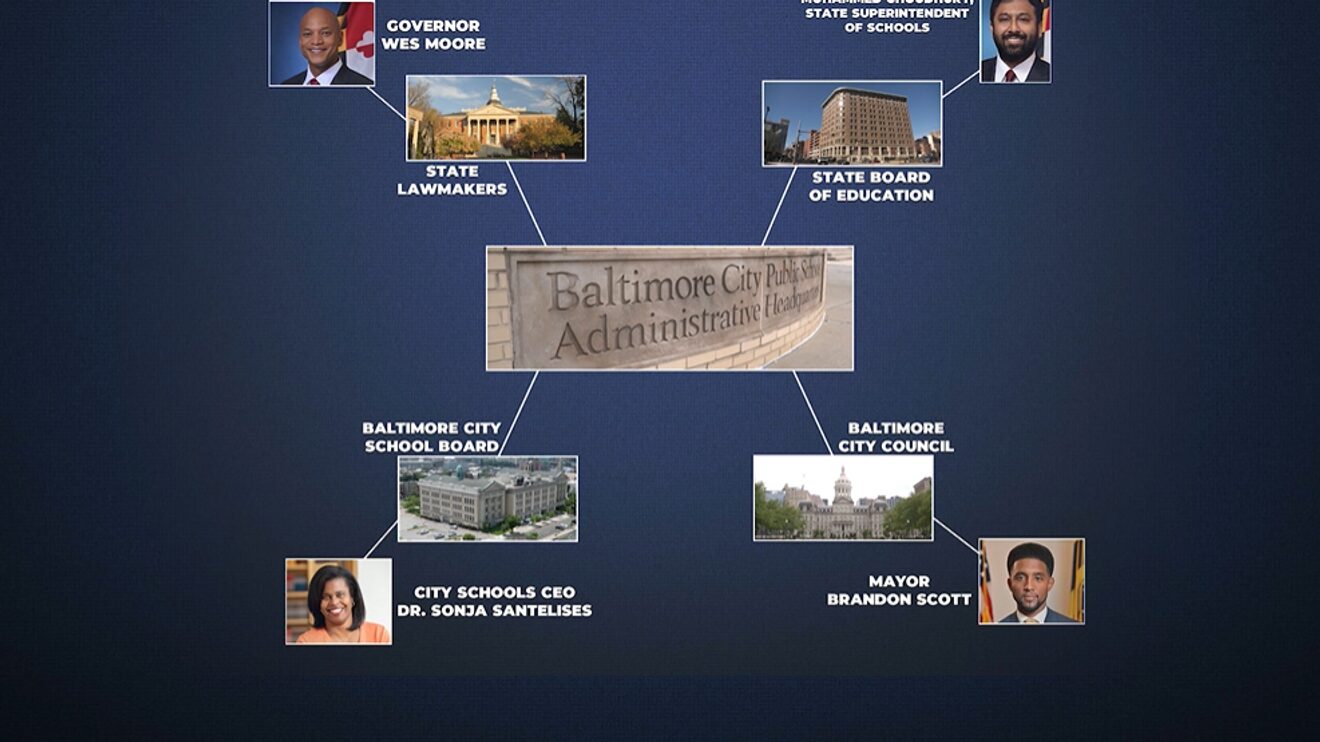
Funding for Baltimore City Schools primarily comes from state sources, accounting for about 70% of the total budget. State lawmakers, including Senate President Bill Ferguson, have been approached for their input on improving student outcomes, particularly in the context of schools like New Era Academy and Patterson High School, which are located in his district. Ferguson has emphasized the need for urgency but also pointed out that accountability cannot rest on a single individual.
In light of the ongoing challenges, Maryland has committed to investing an additional $30 billion in public education over the next eight years through The Blueprint for Maryland’s Future, also known as the Kirwan Plan. Governor Wes Moore has expressed strong support for this initiative, emphasizing that public funds should be directed to public education rather than private school scholarships.
Local leaders, including Mayor Brandon Scott, have shown support for the current leadership of the school system, despite controversies surrounding past scandals. Recently, Project Baltimore reached out to the mayor and City Council members regarding their stance on the leadership of Dr. Sonja Santelises in light of the poor math scores, but received no responses.
Councilman Robert Stokes has suggested that improving parental involvement and adjusting the math curriculum could aid in addressing the problem. He believes that enhancing the understanding of math concepts for both parents and students is crucial.
As discussions continue about accountability and potential interventions, the Maryland State Board of Education has acknowledged the unacceptable achievement levels. Board officials have hinted at a forthcoming partnership aimed at enhancing educational outcomes, although specific details have yet to be disclosed.
Reported by HarborBeat based on WBFF (source).
0 Comments
Log in to join the conversation.