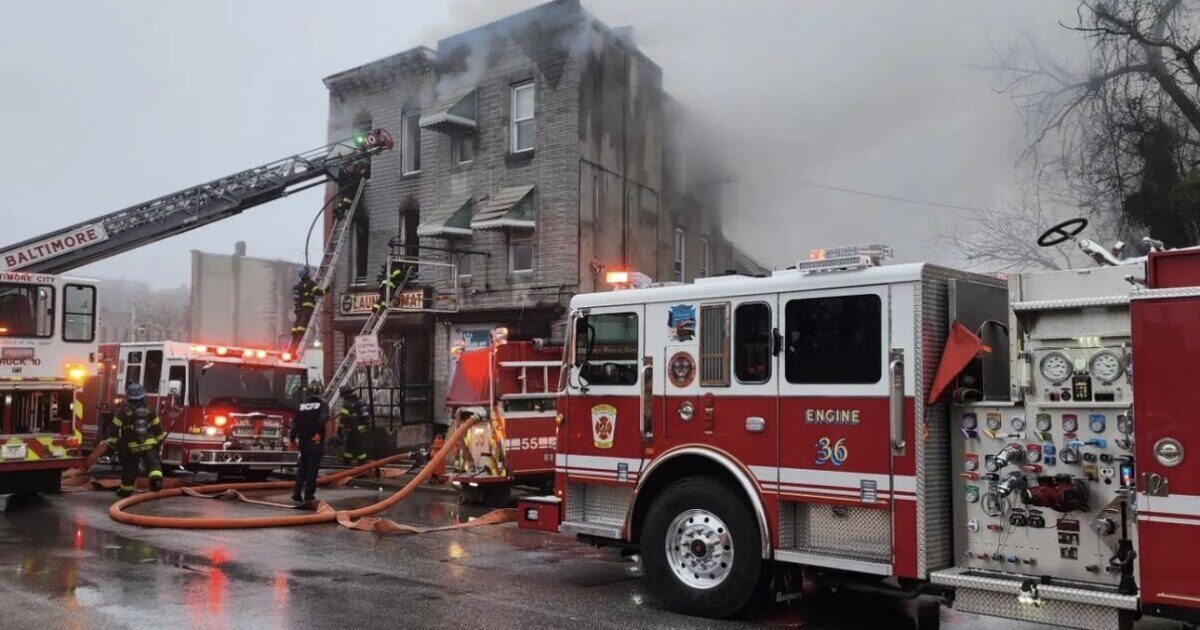
The Baltimore City Fire Department has presented three potential funding options to city leaders aimed at addressing a critical shortage in its fire truck fleet. Currently, the department operates with 30% fewer fire engines than necessary to adequately serve the city and ensure public safety during emergency calls.
Joshua Fannon, president of the Baltimore Fire Officers Association, highlighted to the city council’s Public Safety and Government Operations Committee that the department is down five permanently staffed fire companies, not due to staffing issues but because of a lack of available vehicles. This situation poses risks to both firefighters and the community.
In response to concerns raised by City Councilmember Zeke Cohen, the fire department outlined its needs in a report. The current budget of $24 million is insufficient, and the report details three scenarios for potential funding increases:
- Maintain the current budget, which would lead to a gradual decline in the fleet.
- Increase the budget by $7.5 million annually, allowing for moderate growth and a fully functional fleet within ten years.
- Boost funding by $15 million each year, enabling a complete fleet restoration in just five years.
Aging vehicles are a significant issue, resulting in increased maintenance and downtime. Industry standards recommend that ambulances, fire engines, and ladder trucks have lifespans of six, ten, and fifteen years, respectively. However, the current fleet averages 6.3 years for ambulances, 8.5 years for engines, and 9.1 years for ladder trucks, all exceeding the ideal age range.
If the city continues with the $24 million budget, it could lose six vehicles annually, exacerbating the existing shortage. The current replacement plan only allows for the replacement of two ladder trucks, four engines, and eight ambulances each year, which will not keep pace with operational needs.
General Services Director Berke Attila noted that the budget has remained static since 2014, failing to account for inflation and leading to a reduction in available assets. An increase of $7.5 million would allow for the purchase of additional vehicles, while a $15 million increase would significantly improve the fleet's condition.
While the fire department is focused on fleet issues, Councilmember Cohen pointed out other challenges facing the department, including the need for stable leadership following the recent resignation of Fire Chief Niles Ford and ongoing staffing shortages in maintenance roles.
Reported by HarborBeat based on WYPR (source).
0 Comments
Log in to join the conversation.