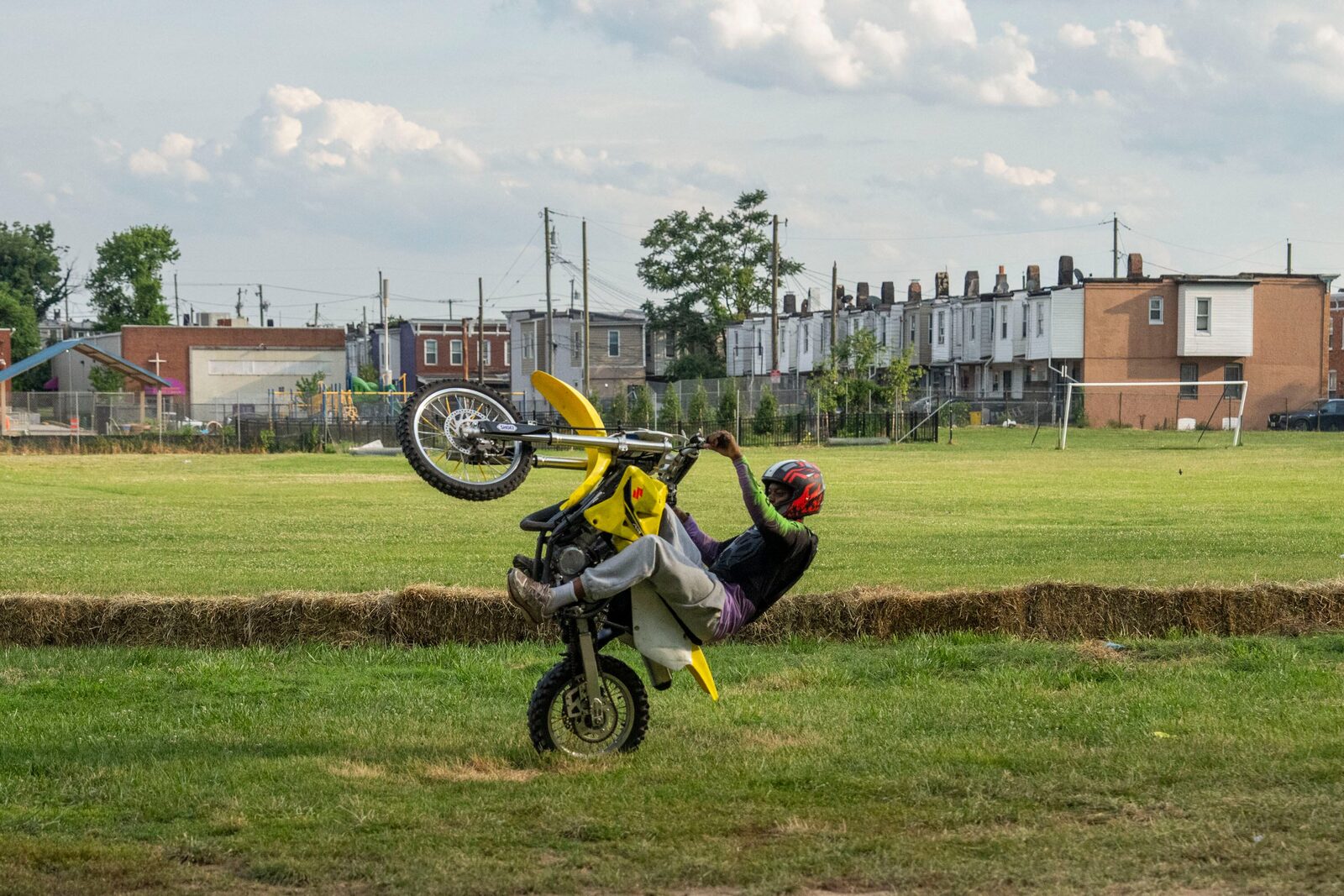
The arrival of warmer weather in Baltimore signals the start of dirt biking season, a trend that has sparked ongoing debates among residents and city officials. While some view dirt biking as an integral part of the city's culture, others raise concerns about safety and noise.
Police Commissioner Richard Worley has recently pledged to intensify efforts to curb illegal dirt biking during a budget meeting, stating that the activity poses a nuisance to the city. This declaration has reportedly led to a noticeable decrease in dirt biking activity, according to some riders.
Dirt biking is illegal in Baltimore, with violators facing misdemeanor charges, potential fines of up to $1,000, or even imprisonment for up to 90 days. Despite these restrictions, many residents have fond memories of dirt bikes as a staple of their childhoods, with some even participating in the culture themselves.
For instance, a local photographer and dirt biker known as Hoodie Visuals reminisced about his childhood experiences watching bikers perform tricks and teaching younger kids how to ride. He emphasized the community-building aspect of dirt biking, stating, "It brings a lot of people together." However, this sentiment is not universally shared.
Residents like Charlene Pittman, who lives in a senior facility, have expressed frustration over the disruptive noise from dirt bikes, which she says has affected the well-being of her neighbors. At a recent community meeting in Federal Hill, tensions escalated as some residents voiced their anger over bikers riding recklessly, with calls for violence against them being made.
Brittany Young, founder of the nonprofit B-360, advocates for safer dirt biking practices and has suggested potential solutions such as creating dedicated riding spaces. Young, who grew up in Park Heights, believes that providing designated areas for riders could help mitigate safety concerns while preserving the cultural significance of dirt biking.
Despite the ongoing conflict, dirt biking remains a prominent part of Baltimore's identity. The city has seen a rise in the visibility of its dirt bikers, with some gaining recognition through brand partnerships and art projects. Yet, the safety risks associated with the activity cannot be overlooked, as highlighted by recent incidents involving collisions.
As the summer progresses, the city faces the challenge of balancing the cultural significance of dirt biking with the need for public safety. The ongoing dialogue between residents, law enforcement, and advocacy groups will be crucial in determining the future of this contentious pastime in Baltimore.
Reported by HarborBeat based on The Baltimore Banner (source).
0 Comments
Log in to join the conversation.