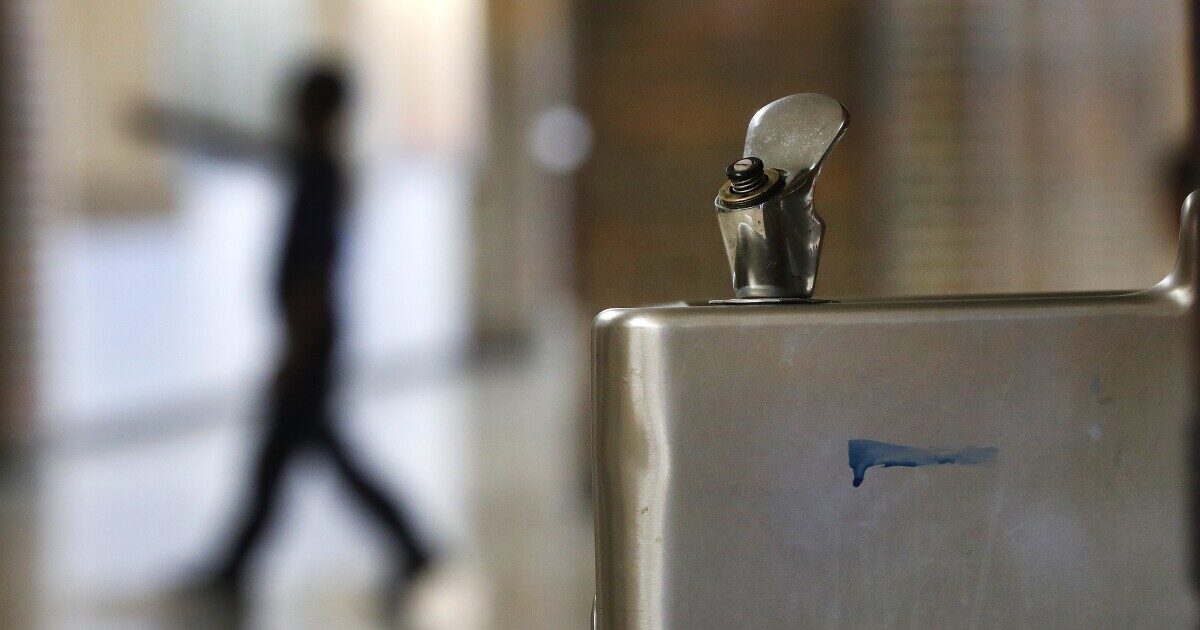
Nearly two decades ago, Baltimore City schools opted to shut off most drinking fountains to mitigate the risk of lead exposure, transitioning instead to five-gallon water jugs. While this change has reduced concerns over lead poisoning, it has introduced a range of logistical challenges.
Zach Taylor, Treasurer of the Baltimore Teachers Union, noted that it is not uncommon for schools to run low on water, often due to delays in deliveries or increased consumption. He stated that some teachers have resorted to purchasing water from grocery stores to ensure their students have access to drinking water.
Despite the efforts to eliminate lead exposure, the number of children in Baltimore City with elevated lead levels remains concerning. In 2023, 363 children tested positive for hazardous lead levels in their blood, accounting for 28% of all new cases reported statewide.
Maryland schools have been mandated to test their drinking water for lead every three years since 2018. However, Baltimore City has only tested 14% of its schools, with one in ten samples revealing elevated lead levels. In contrast, Baltimore County schools tested 89% of their facilities, with 30% of drinking fountain samples exceeding safety thresholds.
Scott Washington, the executive director of school facilities, explained that the aging infrastructure of Baltimore's schools prompted the switch to water jugs in 2007. Currently, 133 schools utilize this system. He emphasized that this approach is a cost-effective solution given the district's budget constraints.
However, Taylor expressed concerns about the distribution of water and the inconsistencies in access across schools. He urged district leaders to create a public logistics plan to improve water delivery, a request that has not yet been addressed.
Roland Dale, the city schools' director of logistics, stated that a plan is in place to monitor water delivery schedules. The district maintains an emergency stockpile of 500 water jugs and aims to respond to requests for additional water within two hours.
Charter schools face additional challenges, as they must manage their own water supply unless their buildings are owned by the district. A former teacher from Coppin Academy recounted that her school ran out of water for weeks, highlighting the strain on water jugs when serving a large student body.
In response to these issues, Jayson Green, director of New Song Academy, noted that the city district has allowed charter schools to utilize its water vendor, helping to reduce costs. He emphasized that families appreciate the jugged water system for its assurance of being lead-free.
While the current system is not perfect, it is viewed as the best available option to protect students from lead exposure.
Reported by HarborBeat based on WYPR (source).
0 Comments
Log in to join the conversation.