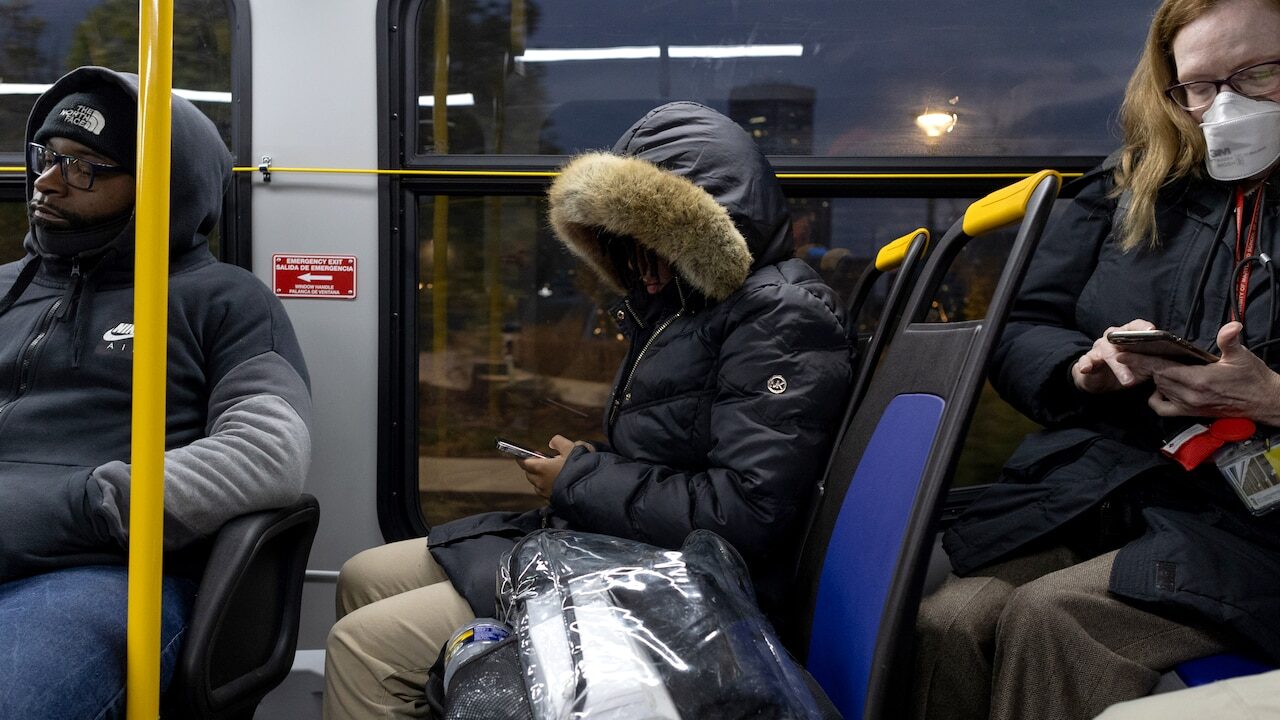
Students in Baltimore are experiencing significant challenges with their daily commutes to school via public transit, according to a new analysis. Many students and their parents have voiced concerns about the lengthy and unpredictable nature of these journeys, often marked by long waits and overcrowded buses.
The Baltimore Banner conducted a comprehensive study to quantify the extent of these issues, mapping the commutes of city middle and high school students and tracking Maryland Transit Administration (MTA) bus locations over several months. This first-of-its-kind analysis found that the average commute time for students is around 40 minutes, which is more than double the average bus commute time in Baltimore County.
Due to a school choice program initiated two decades ago, students do not always attend the school closest to their home, leading to diverse commuting experiences even among neighbors. The analysis involved over 4,000 unique student-to-school combinations, utilizing a routing model developed by researchers at the Massachusetts Institute of Technology and a transit consulting firm.
This model estimated the fastest routes based on MTA schedules, but did not account for factors such as bus cancellations or delays. As a result, the actual commuting experience can be significantly longer, with some students reporting trips exceeding 90 minutes each way.
Nearly 60% of students are required to transfer at least once during their commute, which raises the likelihood of missed connections and extended travel times. On average, a missed bus can add an additional 20 minutes to a student’s journey. The study tracked MTA bus locations every five seconds from early morning until midnight, compiling data that revealed about 25% of buses do not arrive on time during morning commutes, and this figure rises to one-third in the afternoon.
While MTA defines an on-time arrival as within a nine-minute window, more stringent standards used by other urban transit systems suggest that only 62% of buses are actually on time during morning hours, and just 52% in the afternoons. These delays can have serious implications for students, particularly as research indicates that tardiness can adversely affect academic performance.
The findings highlight the pressing need for improvements in Baltimore's public transit system, particularly for the city's youth who rely on these services to get to school.
Reported by HarborBeat based on thebanner.com (source).
0 Comments
Log in to join the conversation.