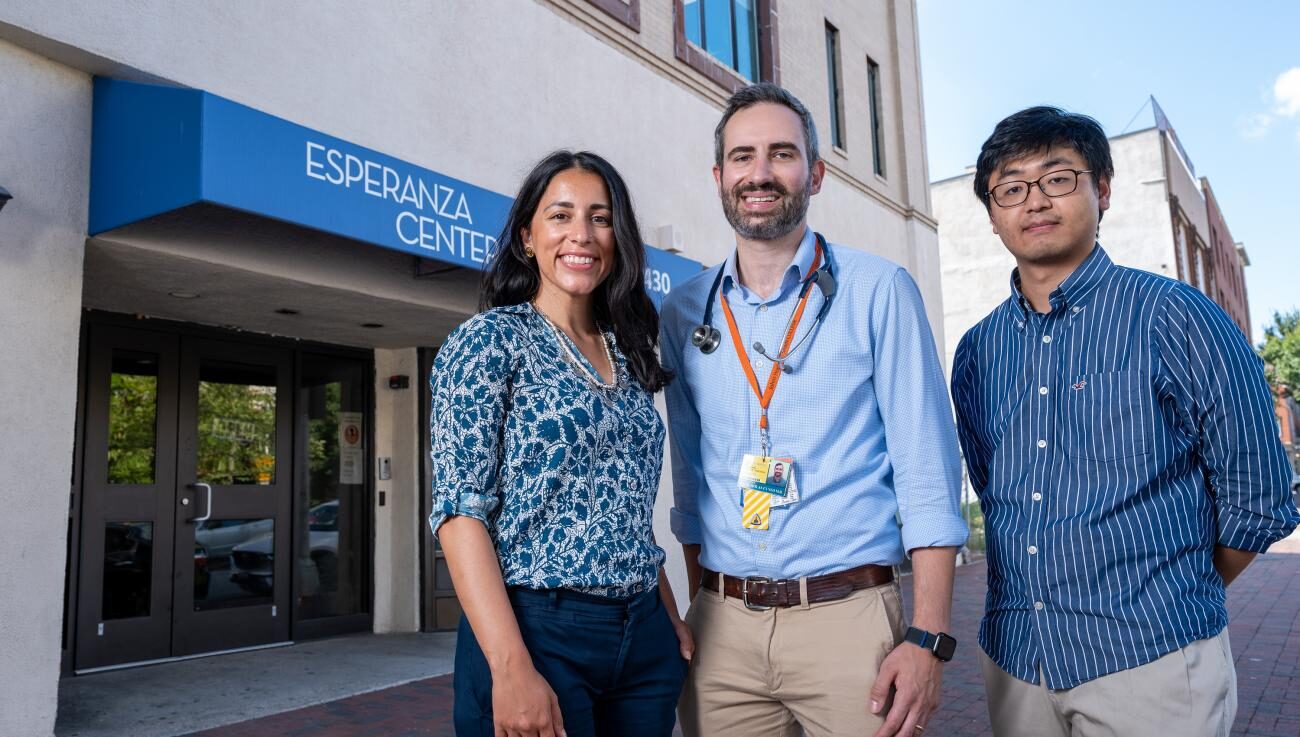
A mother and her young daughter recently arrived at the Esperanza Center in Fell's Point, having traveled over 3,000 miles from El Salvador. They fled their home country due to persistent threats from gangs and organized crime. Now, they seek safety in the U.S. and hope that a forensic evaluation at the center will strengthen their asylum case.
The Esperanza Center, located on South Broadway, serves as a vital resource for immigrants from various countries. It offers healthcare services to those ineligible for government benefits and assists clients in accessing job training, English classes, housing, and other essential services.
Since late last year, the center has hosted the HEAL Refugee Health and Asylum Collaborative, a partnership involving Johns Hopkins University, the Esperanza Center, and Loyola University Maryland. This initiative aims to support individuals displaced from their home countries as they seek refuge in Maryland.
Dr. C. Nicholas Cuneo, a physician at Johns Hopkins and one of the collaborative's founders, has a long history of working with refugees. His journey began during his medical studies, leading to the establishment of the Refugee Health Partnership in 2011, which connects medical students with newly resettled refugees to provide health advocacy and mentorship.
Alongside Nouf Bazaz, a clinical assistant professor at Loyola focusing on refugee mental health, Cuneo has developed a comprehensive health and asylum clinic in Baltimore. Their collaborative efforts have received referrals from numerous nonprofit organizations, including Asylee Women Enterprise and Kids in Need of Defense.
Asylum applicants must demonstrate evidence of harm, often through detailed forensic evaluations that document past trauma. Cuneo emphasizes the importance of such evaluations in improving applicants' chances of receiving humanitarian protection, including asylum.
On a recent evening, Johns Hopkins medical student J.J. Kim volunteered at the Esperanza Center, assisting clients in navigating the evaluation process. Each client meeting involves a team of trained volunteers, including evaluators and interpreters, who work together to ensure a supportive environment.
During the evaluation, the Salvadoran mother and her daughter shared their experiences, which will be documented in an affidavit for their attorney to present in immigration court. Cuneo notes that detailed affidavits significantly enhance the likelihood of a positive outcome for asylum seekers.
Reported by HarborBeat based on Johns Hopkins University (source).
0 Comments
Log in to join the conversation.