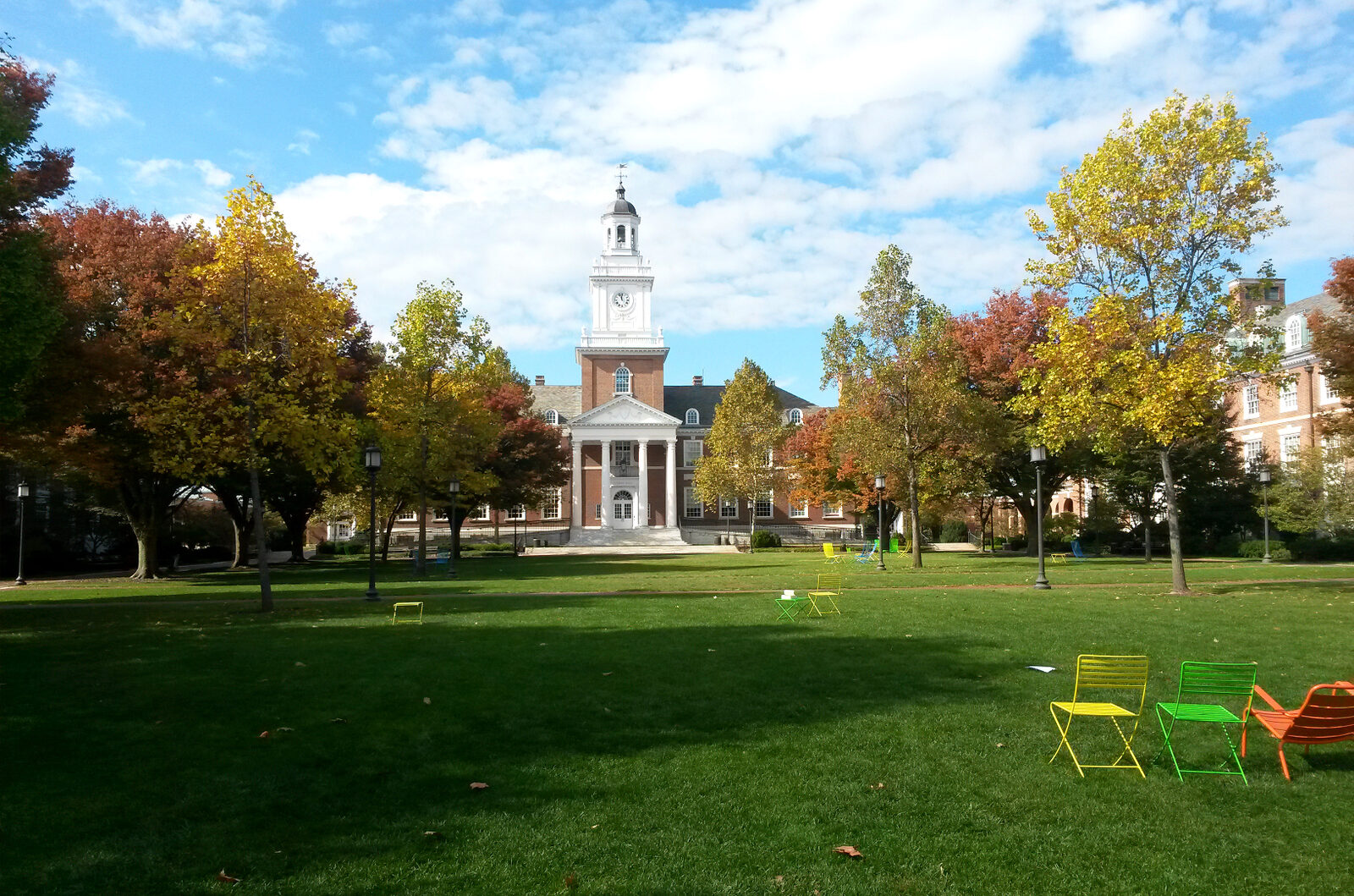
Johns Hopkins University is celebrating its 150th anniversary this month, launching a year-long series of events designed to honor its rich history and contributions to research and education.
The festivities will kick off with a Birthday Celebration and Ice Rink Closing Day on Sunday, February 22, at 2 p.m. This free event requires registration and is expected to attract many community members.
Founded in 1876 under the leadership of its first president, Daniel Coit Gilman, Johns Hopkins University was named after the 19th-century Maryland philanthropist known for his commitment to public health and education. The university was established with the goal of achieving excellence in research and academic standing.
Johns Hopkins, the man, was one of eleven siblings and made his fortune through various business ventures, including investments in the Baltimore and Ohio Railroad. While he is often remembered as an early advocate for abolition, recent research indicates that he had enslaved people until the mid-1800s.
In his will, Hopkins left $7 million to create a hospital, training colleges, an orphanage, and the university, marking one of the largest philanthropic donations in U.S. history at that time. Gilman’s inaugural address emphasized the university’s enduring mission: “To educate its students and cultivate their capacity for lifelong learning, to foster independent and original research, and to bring the benefits of discovery to the world.”
Among its many innovations, Johns Hopkins is credited with the invention of the rubber glove and the development of the Global Positioning System (GPS). In 1890, William Stewart Halsted, a founding doctor at Johns Hopkins Hospital, requested rubber gloves to protect his nurse from harsh disinfectants. This invention not only improved safety for medical staff but also significantly reduced patient infections.
In the 1950s, researchers at the Johns Hopkins Applied Physics Laboratory played a crucial role in the evolution of GPS technology, which was initially developed to track satellites during the Cold War. Their work laid the foundation for modern navigation systems.
Additionally, the university made strides in emergency medicine by developing the first cardiac defibrillator and the manual CPR procedure in the late 1950s, showcasing its commitment to advancing healthcare.
As Johns Hopkins University celebrates this milestone, Baltimore can take pride in the institution's groundbreaking contributions that have had a lasting impact on both local and global communities.
Reported by HarborBeat based on Baltimore Fishbowl (source).
0 Comments
Log in to join the conversation.