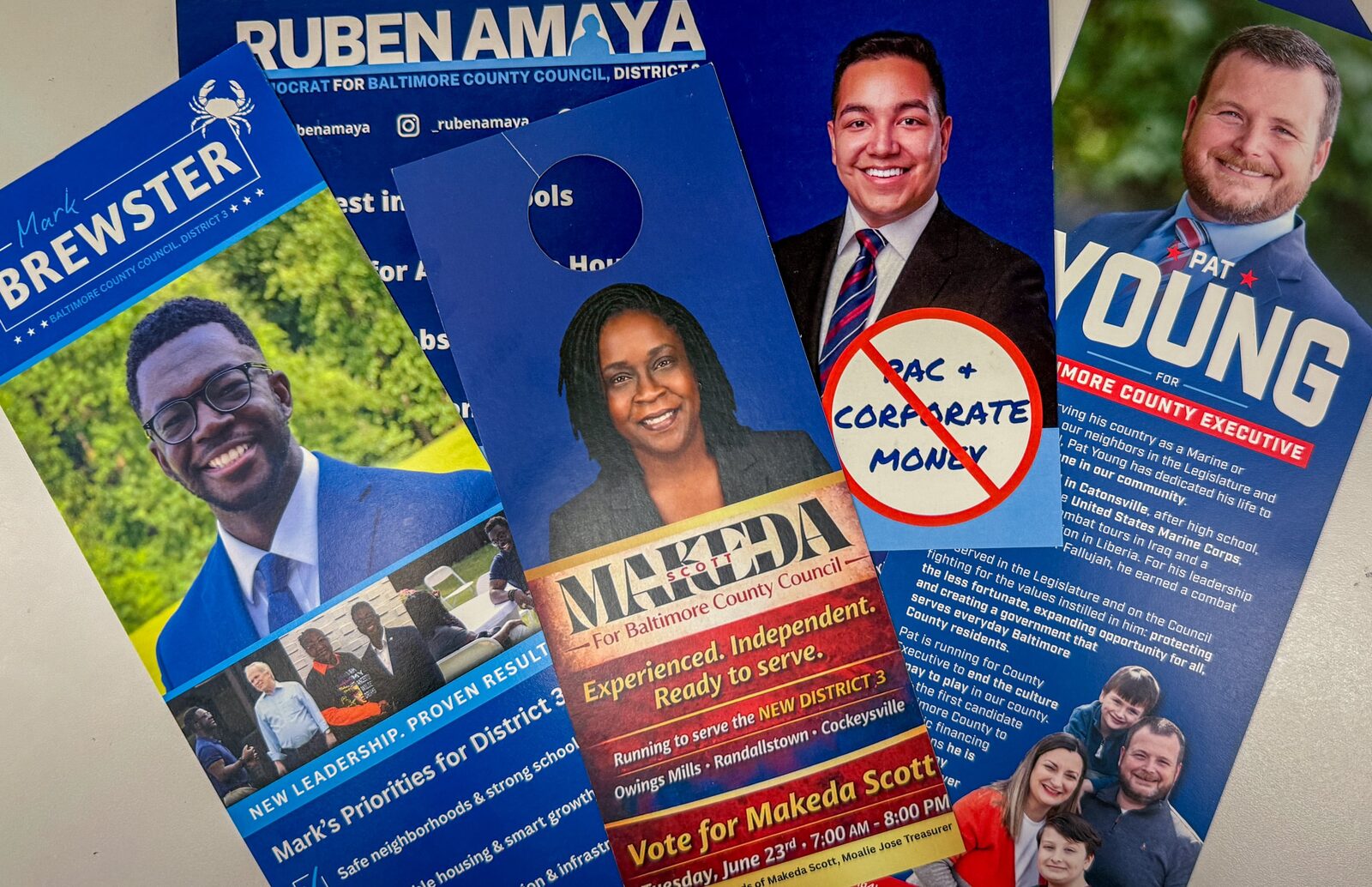
Baltimore County recently experienced its first implementation of public financing in elections, following a voter-approved referendum in 2020. This new system aims to assist candidates who opt out of large donations from businesses and political action committees, while capping individual contributions at $250. The program is designed to support non-traditional candidates, such as Makeda Scott, who is campaigning for the newly established District 3 council seat.
Scott, a former school board chair, expressed optimism about the public financing initiative, stating it provided her with essential resources to reach voters despite lacking significant financial backing. The initiative has been in place for gubernatorial races in Maryland for years, and its introduction at the county level reflects a response to increasing concerns over the influence of money in politics.
The June 23 primary marked a pivotal moment for this financing model, with candidates like Scott and county executive hopeful Pat Young benefiting from taxpayer-funded support. Together, they received $401,269 in public funds, which helped some candidates secure victories in their respective primaries.
However, the program has drawn criticism for its stringent fundraising requirements. To qualify for public financing, council candidates must raise $15,000 from 150 small-dollar donors, a threshold considered among the highest in the state. Comparatively, Howard County mandates $10,000, and Anne Arundel County requires $7,500. Critics argue that these high benchmarks deter potential candidates from participating.
Joanne Antoine, executive director of Common Cause Maryland, pointed out that the county's decision to raise these thresholds contradicted recommendations from a bipartisan task force aimed at enhancing public financing accessibility. Scott noted that the fundraising targets were particularly challenging in her district, where many constituents have been affected by federal layoffs.
For candidates like Young, who campaigned on a platform of independence from special interests, the public financing route did not yield the expected electoral success. Despite raising $196,000 in public funds, he faced significant competition from opponents with traditional funding sources, ultimately placing fourth in the primary.
Some candidates, like Paul Dongarra in District 1, successfully leveraged public financing against well-funded rivals, demonstrating its potential benefits. However, Dongarra acknowledged the difficulties in qualifying for the funds, suggesting the need for a balanced approach to ensure viable candidates can access necessary resources.
As Baltimore County continues to navigate the complexities of public financing, the implications for future elections and candidates remain to be seen. The program's effectiveness in leveling the playing field for diverse candidates is a topic of ongoing discussion.
Reported by HarborBeat based on The Baltimore Banner (source).
0 Comments
Log in to join the conversation.