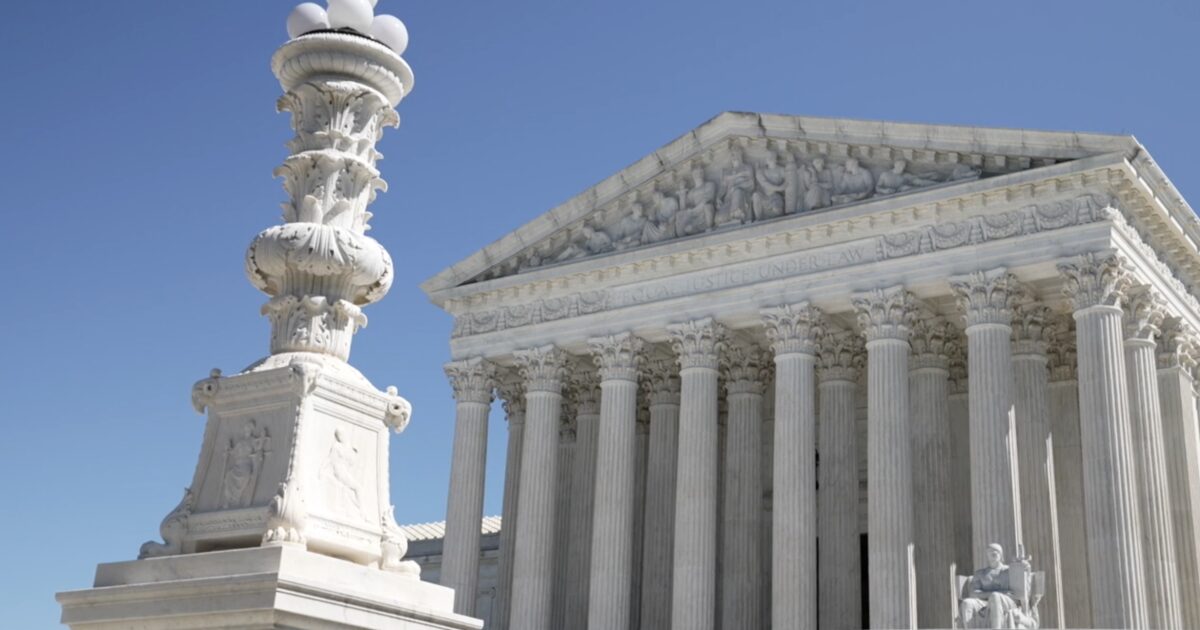
BALTIMORE — In a significant decision, the Supreme Court ruled 6-3 on Tuesday to uphold birthright citizenship, effectively nullifying one of the early executive actions taken by former President Trump aimed at ending this long-standing practice.
The ruling emphasizes the clarity of the 14th Amendment, which legal scholars interpret as a strong rejection of the Trump administration’s attempts to alter immigration policy. Maureen Sweeney, director of the Chacón Center for Immigrant Justice and a law professor at the University of Maryland Francis King Carey School of Law, highlighted the importance of this ruling for families of mixed immigration status.
“This is a really important decision because it does provide a bottom line, and the bottom line is that the Constitution protects children born in the United States regardless of who their parents are,” Sweeney stated. She expressed concern about the potential chaos that could have arisen had the court ruled differently, particularly regarding the issuance of birth certificates by states.
Mark Graber, another professor at the Carey School of Law, noted that he is meticulously reviewing the 200-page ruling for his students. He indicated that the ruling does not signify the end of the political debate surrounding birthright citizenship. “No more than Roe v. Wade put to bed the argument about abortion,” Graber remarked, suggesting that the political struggle will continue.
In response to the ruling, Maryland Governor Wes Moore welcomed the decision, stating it provides relief to the immigrant communities in the state who have faced ongoing challenges from federal immigration policies. He asserted that the federal government cannot selectively determine who qualifies as an American citizen.
Despite the ruling, some issues persist, such as increased enforcement actions by ICE. One notable case involved Dulce Diaz Consuelo Morales, a Baltimore mother who was detained despite having proof of her citizenship.
On the other side of the debate, House Speaker Mike Johnson criticized the court's decision, pointing to concerns about “birth tourism” and its perceived exploitation of the birthright citizenship provision.
Reported by HarborBeat based on WMAR-2 News (source).
0 Comments
Log in to join the conversation.