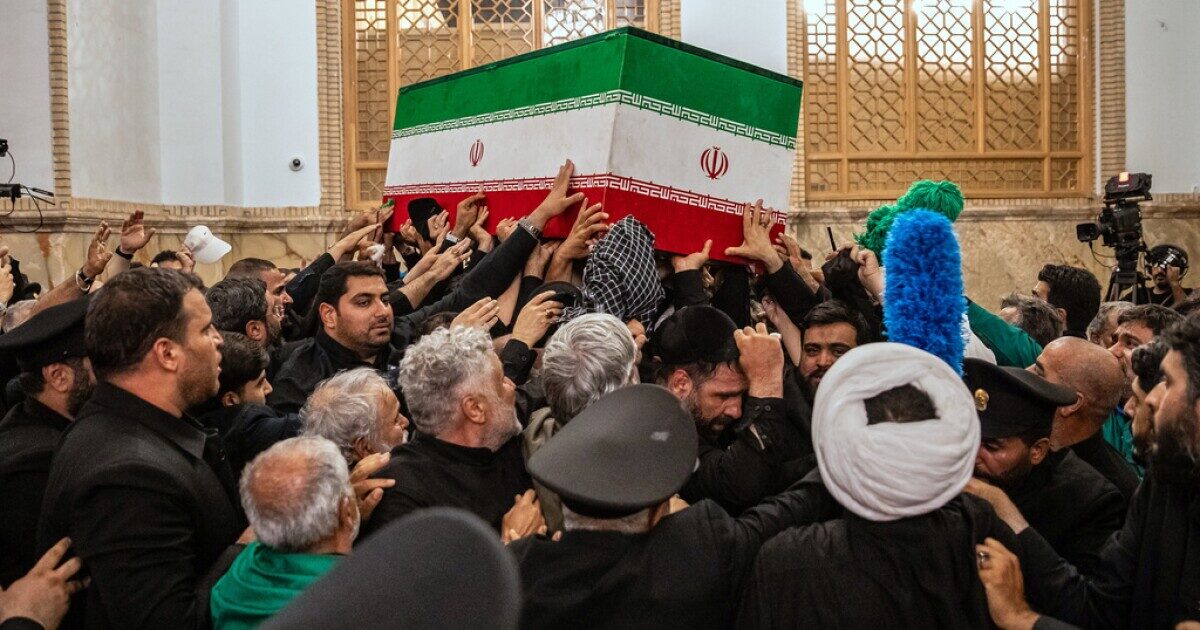
President Donald Trump escalated tensions with Iran on Saturday after the funeral of Supreme Leader Ayatollah Ali Khamenei, where attendees openly called for the U.S. leader's death. The remarks highlight the ongoing strife in the Middle East as negotiations to end the conflict face significant challenges.
Trump's comments, made on his Truth Social platform, came after U.S. officials urged Iran to publicly confirm that the Strait of Hormuz remains open and that vessels traversing the critical waterway will not be harmed. Tehran has yet to comply, asserting control over the strait and demanding fees from ships, thereby challenging long-standing international norms.
The backdrop to these developments includes recent U.S. airstrikes targeting Iranian positions, which were prompted by Iranian attacks on three vessels in the strait earlier this week. Trump declared the ceasefire over while emphasizing that the U.S. would continue to seek a diplomatic resolution.
In his post, Trump warned that “a thousand missiles are locked and loaded” aimed at Iran, responding to threats made during Khamenei's funeral, where mourners held signs demanding his death alongside that of Israeli Prime Minister Benjamin Netanyahu.
The funeral for Khamenei, who passed away at 86, featured a lengthy ceremony that spanned several days, with his body being transported across cities in both Iran and Iraq.
In his statements, Trump invoked religious sentiments, declaring intentions to “decimate” areas of Iran if provoked. His rhetoric has drawn criticism from groups like the Council on American-Islamic Relations, which condemned his remarks as inflammatory.
As U.S. officials reported a series of strikes against Iranian targets, the Iranian government maintained that its theocracy remains unified under the new supreme leader, Ayatollah Mojtaba Khamenei. Meanwhile, Iranian Foreign Minister Abbas Araghchi traveled to Oman for further discussions, indicating ongoing diplomatic efforts despite the heightened military tensions.
The Strait of Hormuz, a vital passage for global oil and gas shipments, has become a focal point in the conflict, with Iran asserting its right to control the corridor and demanding payment from vessels, a move that has raised international concerns.
Reported by HarborBeat based on WMAR-2 News (source).
0 Comments
Log in to join the conversation.