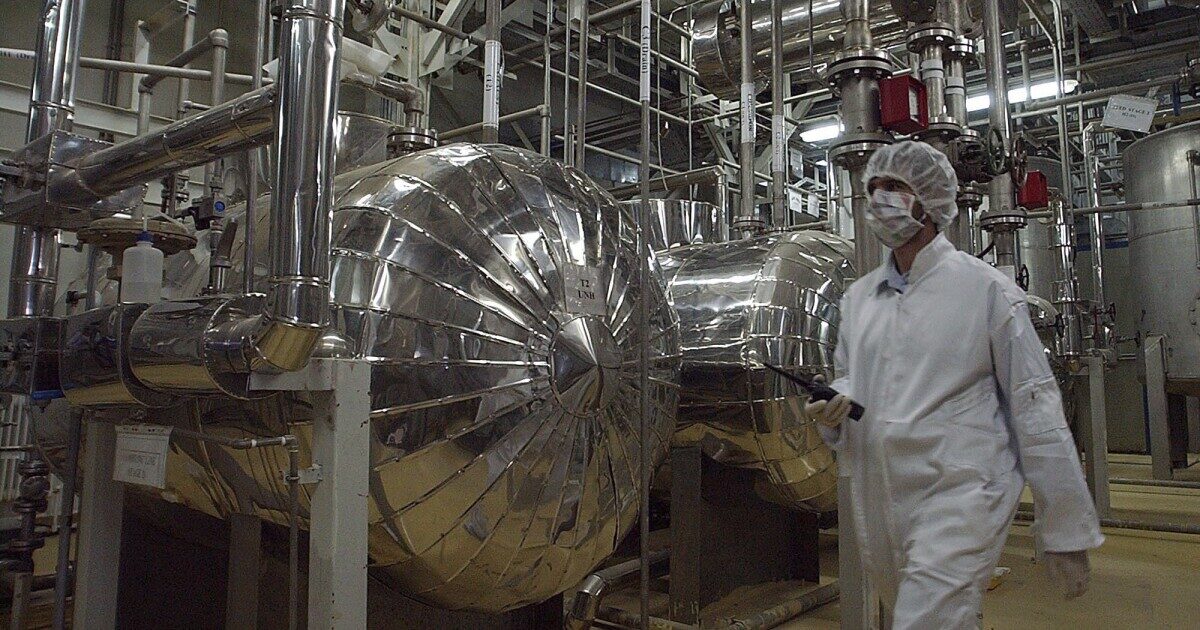
Technical discussions between the United States and Iran are taking place in Switzerland this week as both nations strive for a comprehensive nuclear agreement. A primary objective for the Biden administration is to prevent Iran from acquiring nuclear weapons.
A recently signed memorandum of understanding requires Iran to refrain from developing or producing nuclear arms. Nevertheless, Iranian President Ebrahim Raisi has stated that the country will maintain its right to enrich uranium, a key point of contention in the ongoing negotiations.
The negotiations, which are set to last 60 days, center on the future of Iran's nuclear program, particularly its uranium enrichment capabilities. John Erath, a senior director at the Center for Arms Control and Non-Proliferation, emphasized that this issue is one of principle for Iran, which claims a right to enrich uranium under the Non-Proliferation Treaty (NPT). However, experts argue that the NPT does not explicitly grant such a right.
Uranium, a naturally occurring heavy metal, must be enriched to increase the concentration of the U-235 isotope for use in energy production or weapons. Natural uranium contains only about 0.7% U-235, while enrichment for nuclear power typically raises this to 3-5%. Iran's nuclear research facilities require uranium enriched to around 20%, and weapons-grade uranium is generally enriched to 90%.
A prospective agreement could impose restrictions on Iran's enrichment levels, but a significant challenge remains: addressing the stockpile of highly enriched uranium that Iran currently possesses. Sebastian Philippe, a nuclear security expert from the University of Wisconsin-Madison, pointed out that even without new enrichment capabilities, Iran's existing stockpile poses a risk for immediate nuclear weapons development.
Experts believe the current conditions are favorable for a new nuclear deal, partly due to Iran's strategic leverage in the region, particularly regarding the Strait of Hormuz. Erath noted that Iran could exert considerable influence without necessarily resorting to nuclear weapons.
The Biden administration has announced that Iran has agreed to permit international nuclear inspectors to return to the country, marking a significant step forward. Any conclusive agreement between the US and Iran is likely to include provisions for ongoing inspections over the coming years.
Reported by HarborBeat based on WMAR-2 News (source).
0 Comments
Log in to join the conversation.