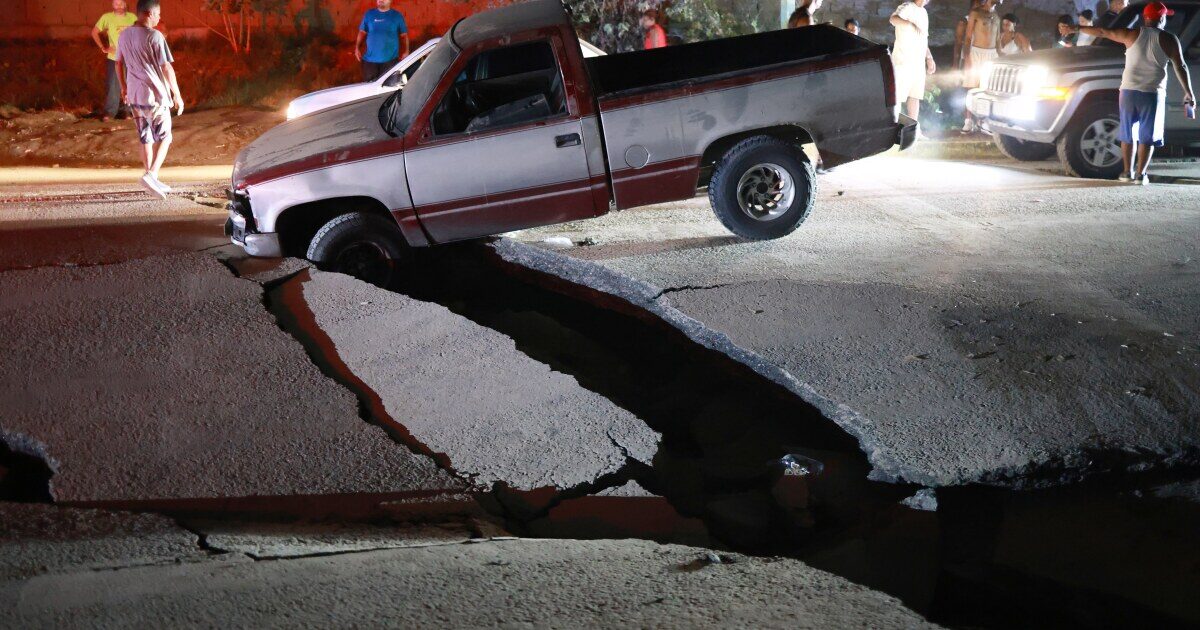
Venezuela experienced a series of powerful earthquakes on Thursday, leading to the deaths of more than 150 individuals and causing extensive damage in Caracas, the nation’s capital.
The country is situated near several fault lines, making it particularly susceptible to seismic activity. Dr. Ellen Prager, a noted author and chief scientist at StormCenter Communications, indicated that such occurrences are not unusual for this region.
Dr. Prager referred to the area as an "earthquake time bomb," a term coined by seismologist Robert Yeats, emphasizing the longstanding awareness of its high seismic risk due to its tectonic settings. She noted that a significant earthquake in 1812, which registered a magnitude of 7.7, resulted in approximately 500 deaths. Given that millions more people now inhabit the region, the potential for devastation has increased dramatically.
While the recent earthquakes occurred near the Venezuelan coastline, there was no immediate tsunami warning issued. Dr. Prager explained that the nature of the fault movement was a strike-slip fault, where tectonic plates slide past each other without significant vertical movement. This type of fault typically does not generate tsunamis, which require vertical displacement underwater.
However, she cautioned that there remains a risk of submarine landslides that could displace water and potentially lead to tsunami conditions.
Reported by HarborBeat based on WMAR-2 News (source).
0 Comments
Log in to join the conversation.