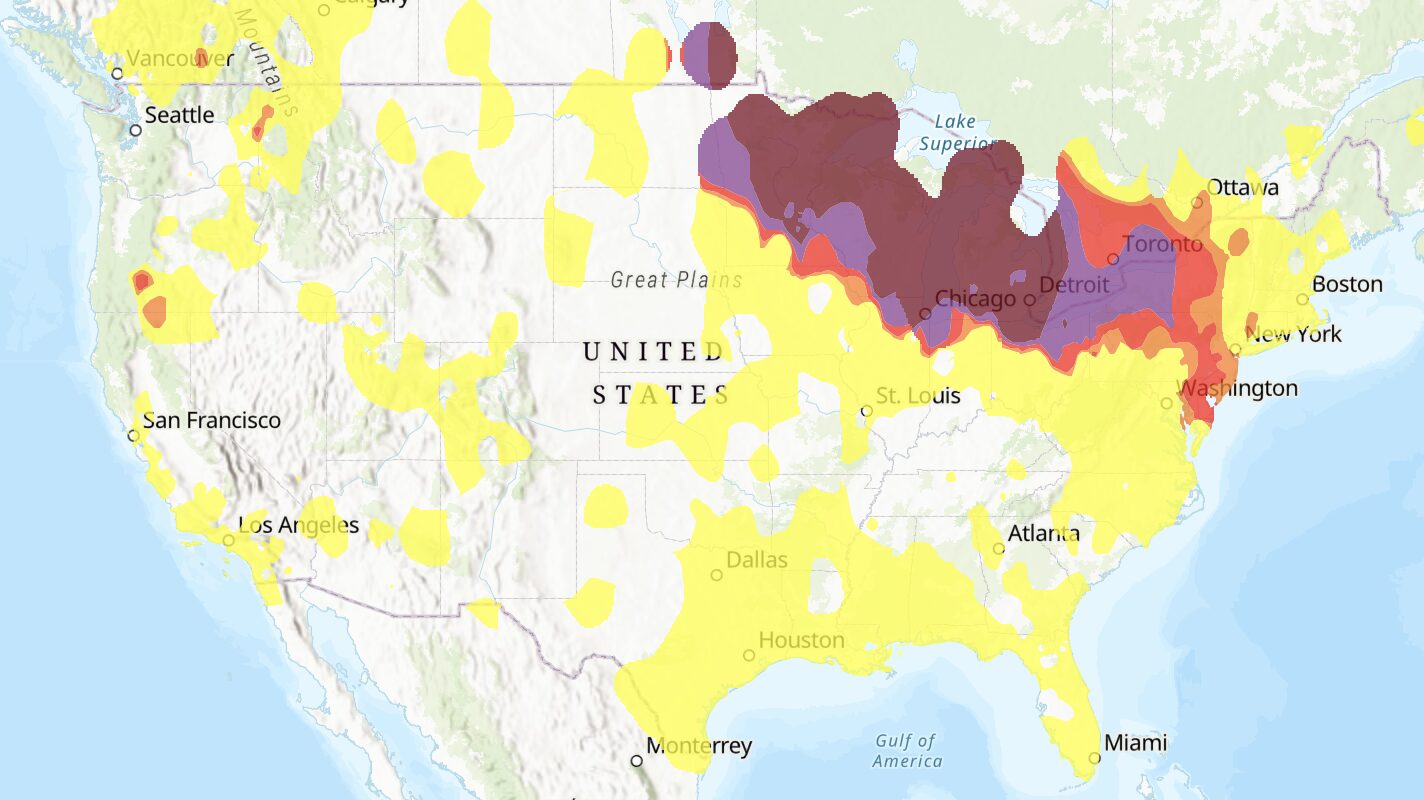
Residents in the Upper Midwest and parts of the Northeast are facing some of the most hazardous air quality levels in the world due to smoke from ongoing wildfires in Canada.
Currently, more than 100 wildfires are active across Canada, with winds pushing smoke southeastward into the United States. The skies over states bordering the Great Lakes have taken on a surreal, hazy appearance, prompting concerns from health officials as forecasts indicate that the smoke will continue to spread.
The Environmental Protection Agency's AirNow website has classified air quality in cities like Detroit and Chicago as "hazardous," the highest warning level. This poses significant risks to sensitive populations, including children, the elderly, and individuals with pre-existing heart or lung conditions.
As the smoke drifts further south and east, areas in the Northeastern U.S. and the Mid-Atlantic are bracing for deteriorating air quality. The worst-affected regions currently include Wisconsin, Minnesota, Michigan, and northwestern New York.
Officials are advising residents to reduce outdoor activities and remain indoors whenever possible. The smoke is projected to affect over 115 million Americans nationwide.
Compounding the air quality issues is a heat wave impacting various parts of the country, with temperatures exceeding 100 degrees Fahrenheit in some areas. This extreme heat is creating a heat dome effect, which concentrates the smoke closer to the ground.
Reported by HarborBeat based on WMAR-2 News (source).
0 Comments
Log in to join the conversation.